
 Pin It
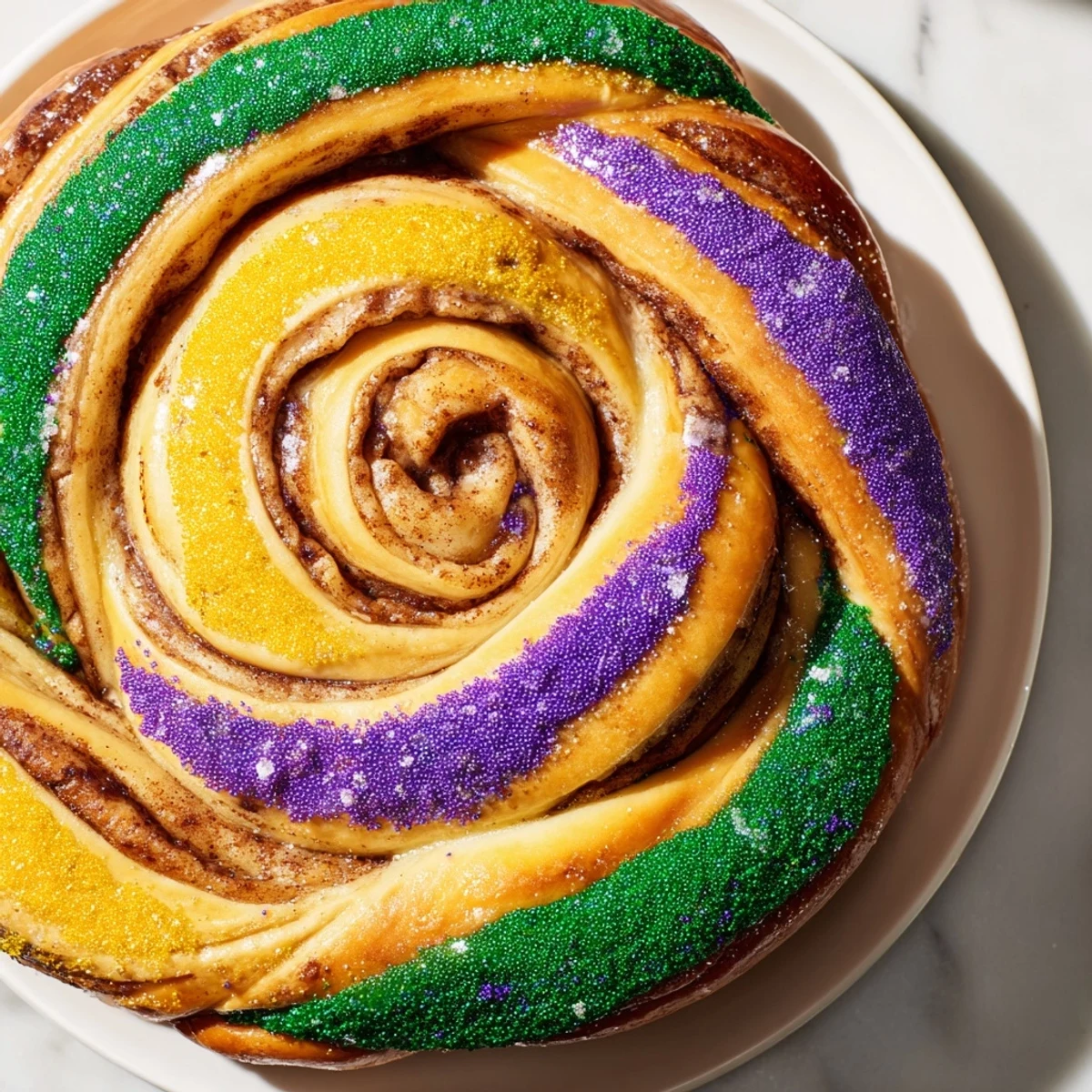
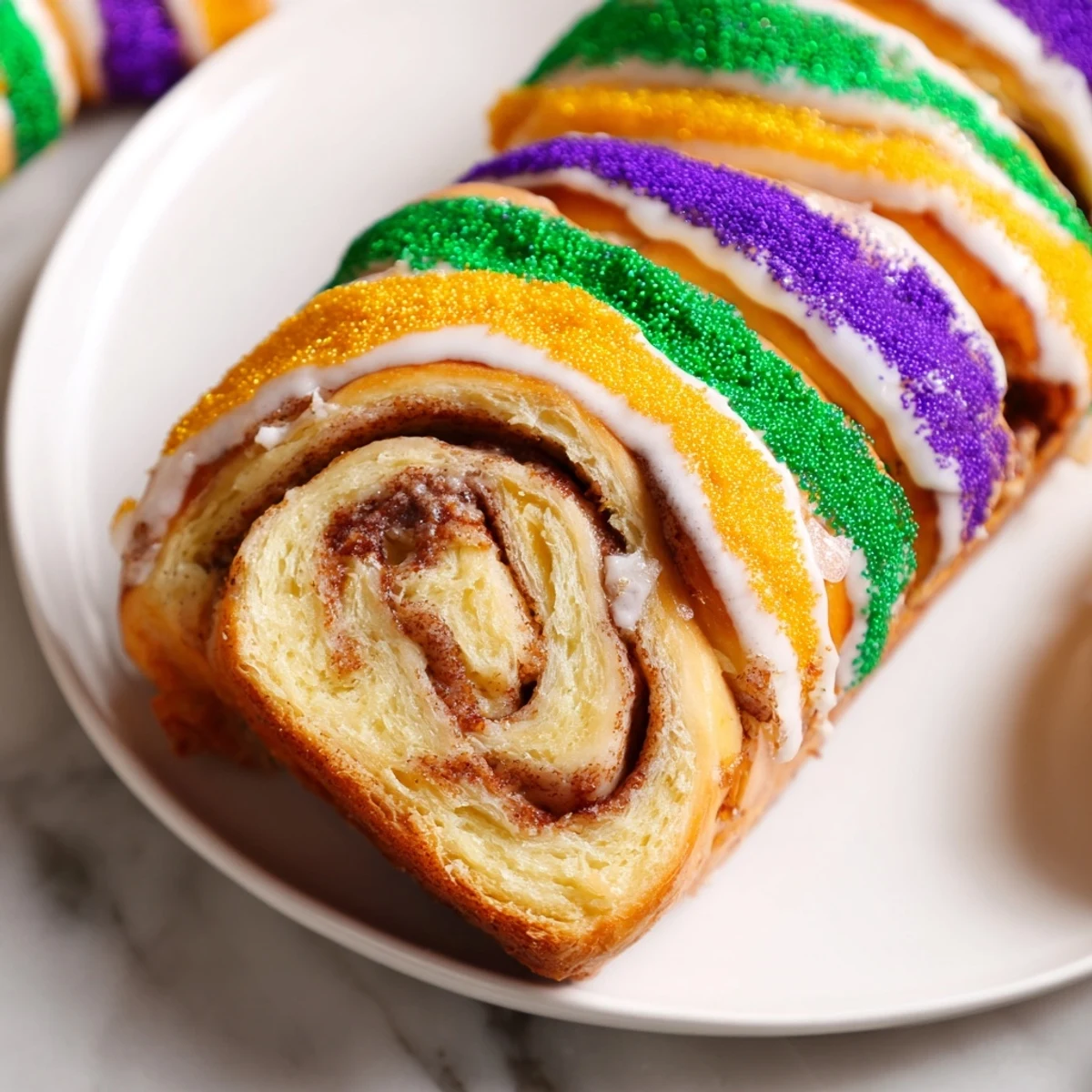
 This classic New Orleans treat features a soft, buttery brioche dough filled generously with a sweet cinnamon-sugar mixture. The dough is rolled, shaped into a ring, and baked to a golden finish. After cooling, the cake is adorned with a smooth vanilla icing and colorful sanding sugars in festive purple, green, and gold hues to evoke Mardi Gras spirit. The delicate layers and tender texture make it perfect for sharing and celebration.
Preparation involves proofing yeast, mixing and kneading the dough until smooth, and allowing it to rise twice for optimal fluffiness. The cinnamon filling blends brown sugar, cinnamon, flour, and butter for a rich, gooey center. This celebratory bread is often garnished with optional traditional decorations that add to its charm.
The air in my tiny apartment kitchen smelled like yeast and possibility the first year I attempted a King Cake alone. I had just moved back from a brief stint in New Orleans and was desperate to recreate that purple, green, and gold magic. My roommates gathered around, skeptical but curious, as I rolled out the dough with nervous excitement. That first attempt wasn't perfect, but the joy of biting into something that tasted like celebration stayed with me forever.
Last February, my neighbor Sarah knocked on my door holding a jar of homemade fig preserves and asking about the yeasty aroma wafting through the building. We ended up spending the entire afternoon braiding dough and trading stories about our favorite Carnival memories. Now it's become our annual tradition, and neither of us can imagine Fat Tuesday without flour on our aprons and cinnamon in the air.
Ingredients
- Whole milk, warmed: The warmth activates your yeast beautifully, but test it on your wrist like baby bottle temperature to avoid killing those precious microorganisms
- Unsalted butter, melted: Melted butter incorporates more evenly into the dough than softened, creating those tender, pillowy layers
- Active dry yeast: One packet is exactly what you need, and watching it foam up in the warm milk never gets old
- Granulated sugar: This feeds the yeast and adds just enough sweetness without making the dough cloying
- Large eggs, room temperature: Room temp eggs emulsify better into the dough, so take them out at least 30 minutes before baking
- Pure vanilla extract: Don't skip this, it adds that warm, comforting background note that makes the cake taste special
- Salt: Essential for balancing sweetness and strengthening the gluten structure
- All-purpose flour: Bread flour works too for chewier texture, but AP flour gives that classic tender crumb
- Packed light brown sugar: The molasses in brown sugar creates a gooier, more caramel-like filling
- Ground cinnamon: Freshly ground cinnamon makes a huge difference if you can manage it
- Powdered sugar: Sift it first to avoid lumpy icing that ruins your pretty drizzle
- Milk for icing: Start with less and add more gradually until you reach that perfect pourable consistency
- Purple, green, and gold sanding sugar: These colors represent justice, faith, and power, and they transform the cake into something truly festive
Instructions
- Wake up the yeast:
- Combine warm milk and melted butter in a small bowl, sprinkle the yeast on top, and walk away for exactly five minutes. You'll come back to a lovely foamy layer that proves your yeast is alive and ready to work.
- Mix the dough:
- In your stand mixer or large bowl, combine the yeast mixture with sugar, eggs, vanilla, and salt. Gradually add flour while mixing, watching the mixture transform from shaggy to a soft, slightly sticky dough that clings to the hook.
- Knead until smooth:
- Turn the dough onto a floured surface and knead for 6 to 8 minutes, feeling it transform from tacky to smooth and elastic under your hands. The dough should bounce back when you poke it gently with your finger.
- Let it rise:
- Place the dough in a greased bowl, turning once to coat all sides, then cover and let it rise in a warm, draft-free spot until doubled in size, about 1 to 1.5 hours. I like to put it in my oven with just the light on.
- Prepare the filling:
- While dough rises, mix brown sugar, cinnamon, flour, and softened butter until you have a spreadable paste that smells like everything good about breakfast.
- Roll and fill:
- Punch down the risen dough gently, then roll it into a 10 by 20 inch rectangle. Spread the cinnamon filling evenly over the surface, leaving a small border so nothing spills out during rolling.
- Shape the ring:
- Starting from the long side, roll the dough tightly into a log, pinch the seam to seal, then gently form it into a ring by pinching the ends together. Place on a parchment-lined baking sheet.
- Second rise:
- Cover the ring loosely and let it rise again until puffy and noticeably larger, about 45 minutes. The dough should feel like a marshmallow when you press it gently.
- Bake to golden:
- Bake at 350°F for 25 to 30 minutes until the top is beautifully golden brown and the cake sounds hollow when tapped on the bottom. Let it cool completely on a wire rack, which is harder than it sounds when your kitchen smells this good.
- Make the icing:
- Whisk powdered sugar, milk, and vanilla until smooth and pourable, thick enough to hold its shape but thin enough to drizzle beautifully over the cooled cake.
- Add the colors:
- Drizzle the icing over the cake while it's still wet, then immediately sprinkle purple, green, and gold sanding sugars in alternating stripes. The sugars need wet icing to stick, so work quickly.
- Hide the baby:
- If you're using a plastic baby, push it into the underside of the cooled cake from underneath. Whoever gets the slice with the baby hosts next year's party, or buys the next cake.
 Pin It
 My sister-in-law from Baton Rouge taught me that the baby goes in from underneath after baking, which prevents anyone from accidentally biting down on plastic. It also adds an element of surprise since nobody can see where it's hidden. Last year my dad got the baby three times in a row, and we're still not sure if he was cheating or just incredibly lucky.
Getting the Dough Texture Right
The dough should feel tacky but not sticky, like the back of a Post-it note rather than tape. If it's too dry, the cake will be tough and dense. Too wet, and it won't hold its shape during baking. Trust your hands more than the exact measurements, as humidity can affect how much flour your dough needs.
Forming the Perfect Ring
When shaping your ring, overlap the ends by about 2 inches and pinch them together firmly, almost like you're sealing an envelope. The dough will try to spring apart during baking, and a weak seal means your ring transforms into a giant cinnamon roll instead. If the seam keeps popping open, wet your fingers with water and try again.
Creating Those Signature Stripes
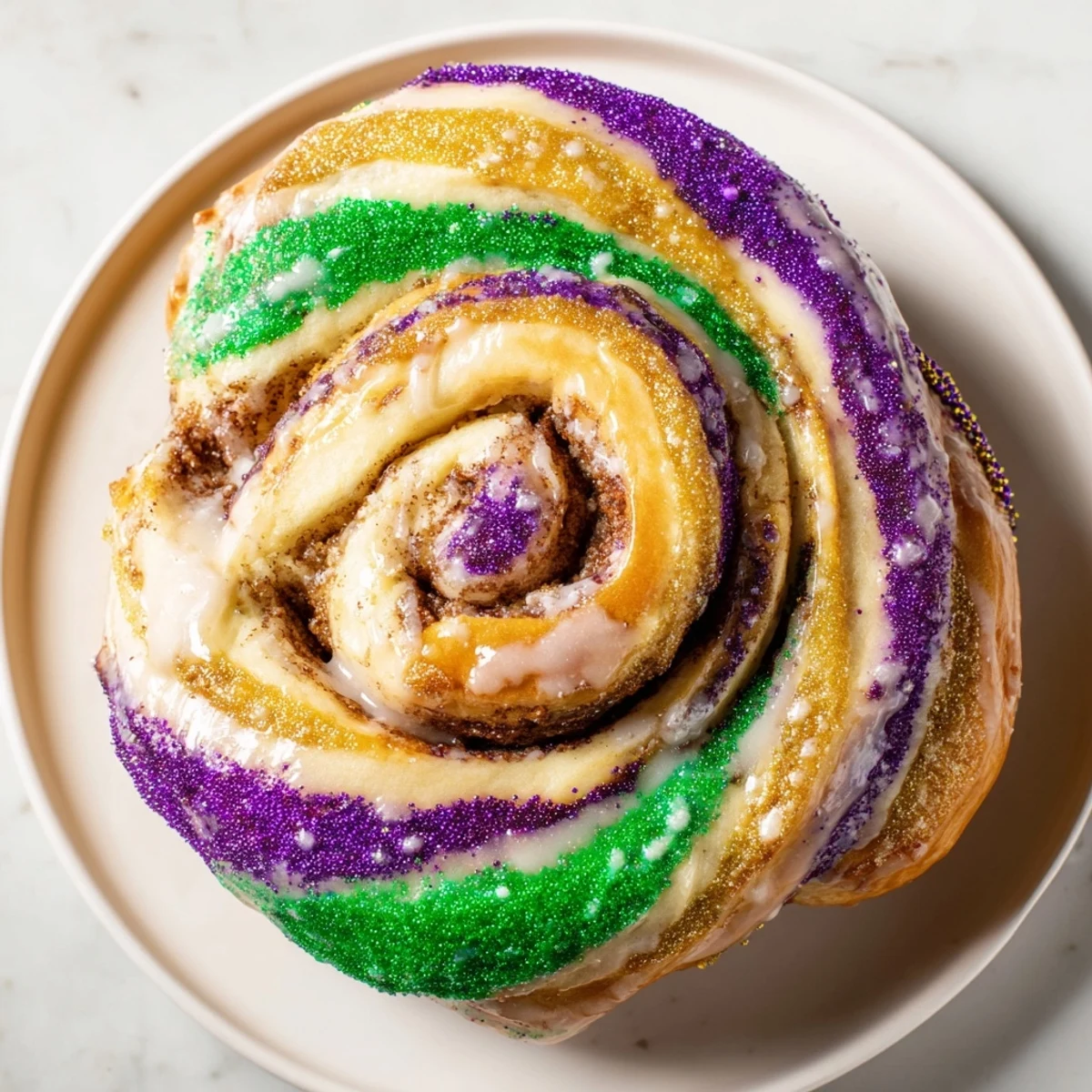
The key to professional-looking stripes is working quickly while the icing is wet. Have your colored sugars open and ready before you start drizzling. I pour each color into a small bowl first so I can grab handfuls instead of trying to shake from those tiny packets. Go diagonal with your stripes, and don't worry about perfection, the homemade look is part of the charm.
- Alternate colors in repeating patterns so each slice gets all three colors
- If you run out of one color, just adjust your pattern and keep going
- The sugars will be crunchy the first day but soften beautifully overnight
 Pin It
 Whether you're celebrating Carnival season or just need something festive to brighten a gray February morning, this cake brings a little bit of New Orleans joy right into your kitchen. Laissez les bons temps rouler!
Recipe Questions
- → What type of flour works best for this cake?
-
All-purpose flour yields a tender crumb, but bread flour can be used for a chewier texture with more structure.
- → How do I achieve a soft and fluffy dough?
-
Properly proofing the yeast and allowing the dough to rise twice ensures lightness and tenderness in the final bake.
- → Can I make the cinnamon filling ahead of time?
-
Yes, the filling can be prepared in advance and kept covered at room temperature to make assembly easier.
- → What is the best way to get colorful stripes of icing?
-
Drizzle vanilla icing over the cooled cake, then immediately sprinkle alternating stripes of purple, green, and gold sanding sugars for a festive look.
- → Are there any traditional additions to this dish?
-
A small plastic baby figurine can be inserted into the cake once cooled, representing Mardi Gras tradition.