
 Pin It
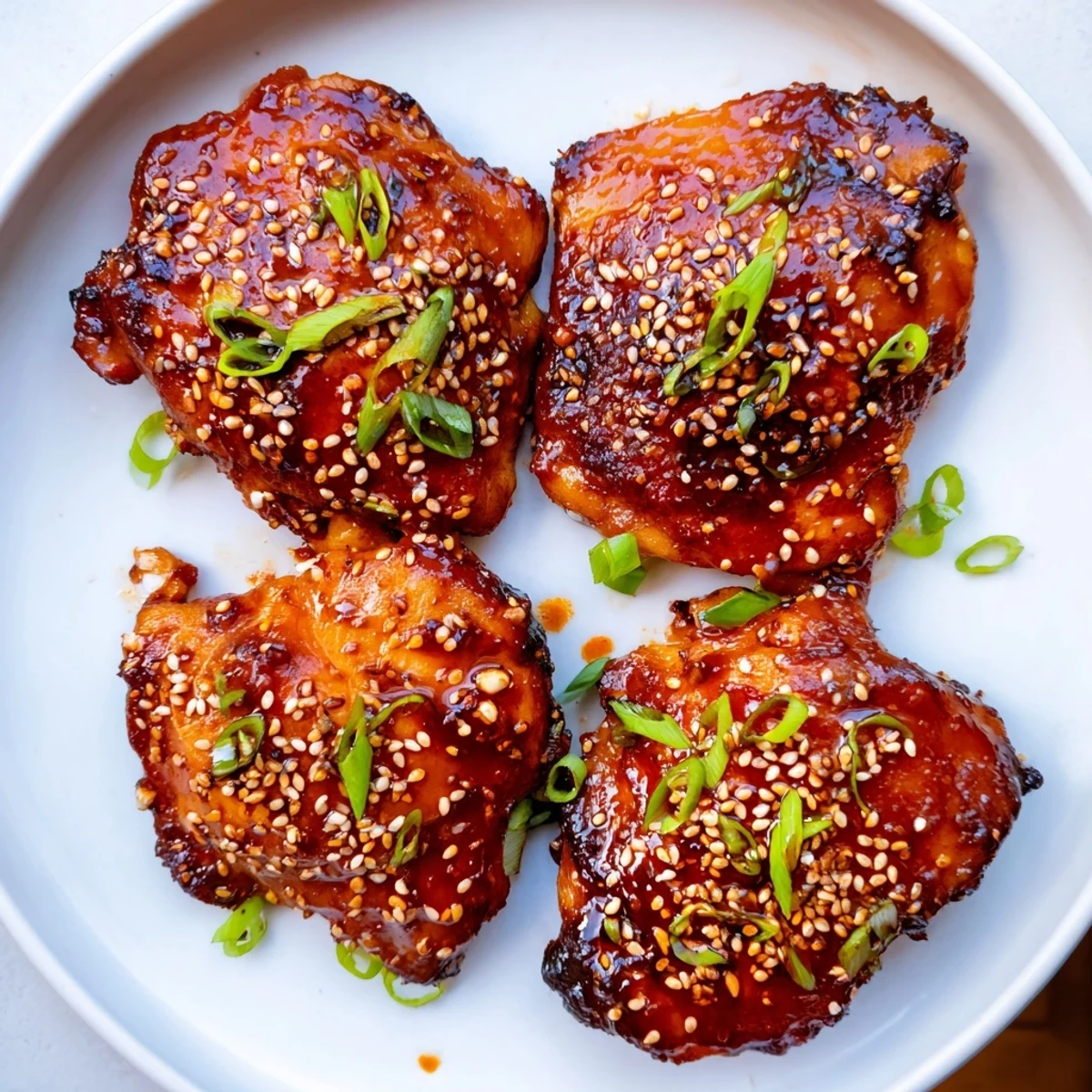
 Marinate 8 boneless chicken thighs in a blend of soy, honey, sesame oil, minced garlic, fresh ginger and gochujang for 30 minutes to 6 hours to build sweet‑savory depth. Roast at 425°F (220°C) or grill over medium‑high for 20–25 minutes, turning once, until caramelized and 165°F internally. Garnish with toasted sesame and sliced green onions; rest briefly and serve with steamed rice or kimchi.
The sizzle of chicken hitting a screaming hot grill plate on a Tuesday evening changed my entire weeknight dinner strategy forever. I had been stuck in a rut of bland baked breasts and tired stir fries when a friend dropped off a tub of homemade gochujang paste and dared me to use it. These Korean chicken thighs were the result, and honestly they ruined me for plain chicken ever since.
My neighbor Dave smelled these through the open kitchen window and actually knocked on my door asking what I was grilling at nine on a weeknight. I handed him a thigh on a paper plate and watched him eat it standing in the driveway, nodding the whole time like he had found religion.
Ingredients
- 8 boneless skinless chicken thighs (about 1.2 kg): Thighs are the hero here because they stay juicy even if you accidentally overcook them by a few minutes.
- 1/4 cup soy sauce: This builds the salty umami backbone of the entire marinade, so use a decent brand you actually enjoy.
- 2 tablespoons honey: Honey helps create that gorgeous lacquered finish when the chicken hits high heat.
- 2 tablespoons sesame oil: Toasted sesame oil gives everything that unmistakable Korean flavor profile.
- 3 cloves garlic minced: Fresh garlic matters here, do not reach for the jarred stuff.
- 1 tablespoon fresh ginger minced: Ginger adds warmth and a slight kick that balances the sweetness beautifully.
- 1 tablespoon gochujang (Korean chili paste): This is the secret weapon that brings subtle heat and deep fermented complexity.
- 1 tablespoon rice vinegar: A splash of acidity brightens everything and keeps the marinade from feeling too heavy.
- 1 teaspoon toasted sesame seeds: These little seeds toast slightly in the marinade and add a nutty crunch.
- 1/2 teaspoon black pepper: Just enough to give the marinade a gentle bite at the edges.
- 2 green onions finely sliced: Green onions in the marinade melt into the sauce and add a mild onion sweetness.
- Garnish of toasted sesame seeds and sliced green onions: Save these for the end because the visual pop makes the dish feel finished.
Instructions
- Build the Marinade:
- Whisk together the soy sauce, honey, sesame oil, garlic, ginger, gochujang, rice vinegar, sesame seeds, black pepper, and green onions in a bowl until the honey dissolves and everything smells incredible.
- Coat the Chicken:
- Toss the chicken thighs into a large resealable bag or bowl, pour the marinade over them, and massage every piece until completely coated. Let them soak in the refrigerator for at least 30 minutes or up to 6 hours if you have the patience.
- Get Your Heat Ready:
- Preheat your oven to 425 degrees Fahrenheit or fire up the grill to medium high so it is ripping hot when the chicken lands on it.
- Cook Until Golden:
- Shake off the excess marinade and lay the thighs on a parchment lined baking sheet or straight onto the grill grates. Cook for 20 to 25 minutes, flipping halfway through, until the internal temperature hits 165 degrees Fahrenheit and the edges are deeply caramelized.
- Finish and Serve:
- Transfer the chicken to a platter, scatter sesame seeds and green onions over the top, and serve immediately while the edges are still sticky and slightly crisp.
 Pin It
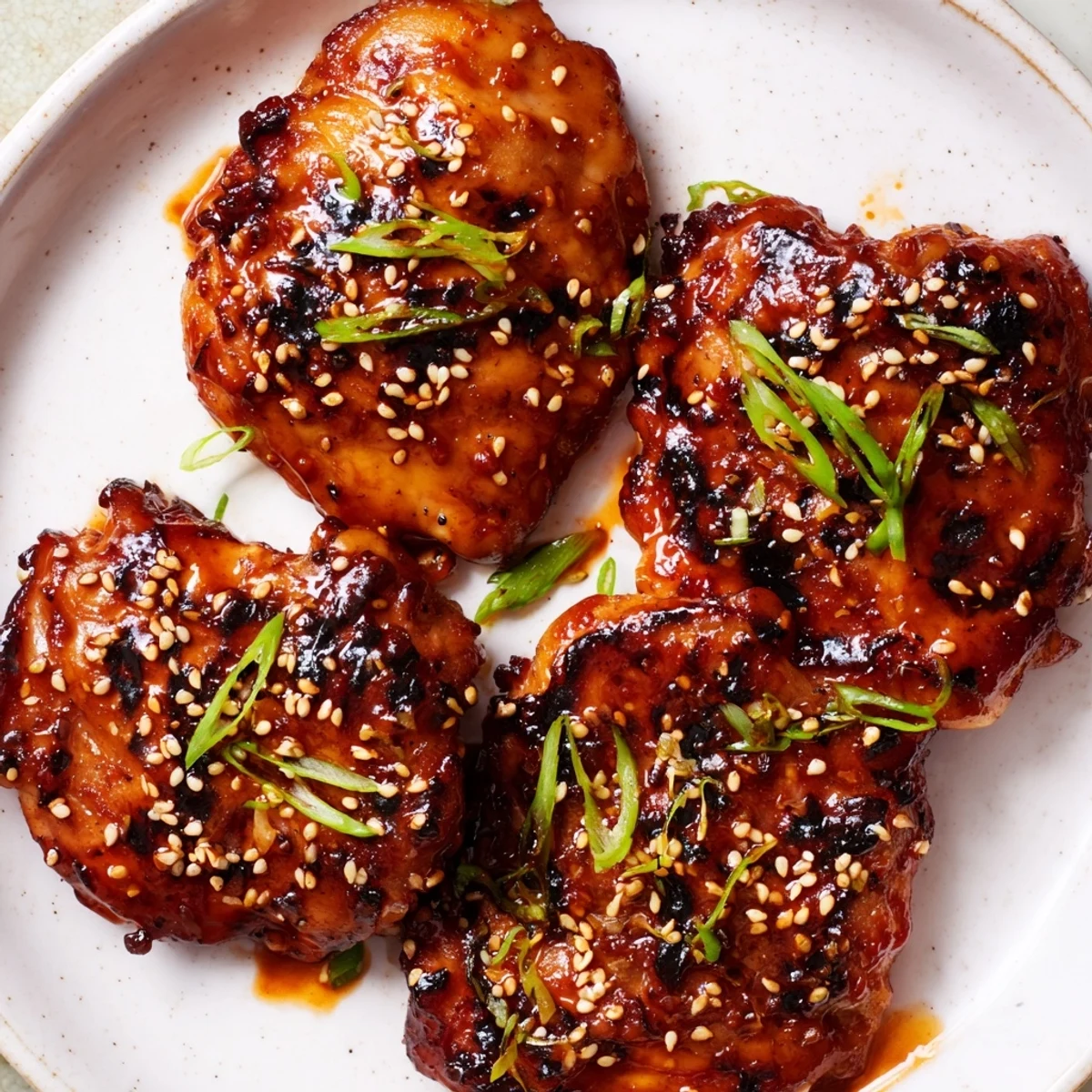
 The first time I made these for a potluck I showed up with an empty serving dish and people were literally scraping the stuck glaze off the bottom.
What to Serve Alongside
Steamed white rice is the obvious move because it soaks up every drop of the sweet soy glaze that pools on the plate. A pile of quick pickled cucumbers or a scoop of cold kimchi cuts through the richness and makes the whole meal feel balanced rather than indulgent.
Handling the Heat
Gochujang is more about depth than raw fire, so do not be afraid of it even if you typically shy away from spicy food. If your gochujang happens to be particularly feisty, an extra half tablespoon of honey tames it without muting the flavor.
Making It Your Own
Once you nail the basic marinade you will start tweaking it without even thinking about it. The recipe forgives substitutions gracefully.
- Sriracha works in place of gochujang if that is what your pantry holds.
- Chicken breasts can replace thighs but watch the cooking time closely to avoid dry meat.
- Always let the chicken rest for 5 minutes before serving so the juices redistribute properly.
 Pin It
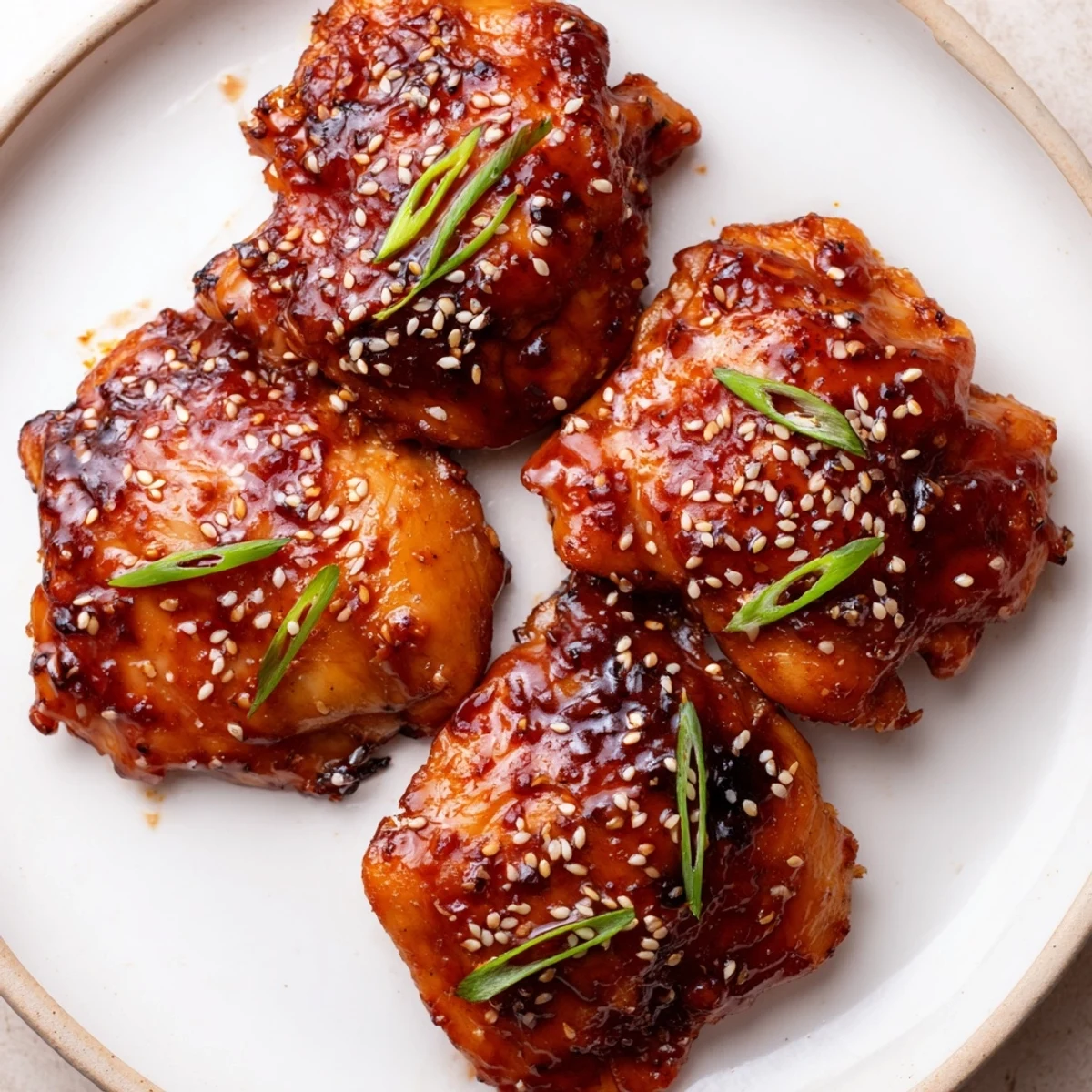
 Some recipes become staples because they are easy, and some earn their spot because they make people close their eyes when they take the first bite. These chicken thighs manage to do both, and that is a rare thing worth holding onto.
Recipe Questions
- → How long should I marinate the thighs?
-
At least 30 minutes for noticeable flavor; 2–6 hours yields deeper penetration. Avoid excessively long marinades for very acidic blends, but soy-based mixes are forgiving for several hours.
- → Can I replace gochujang if I don't have it?
-
Yes. Use sriracha or a chili paste mixed with a touch of miso or brown sugar to mimic the sweet‑fermented heat. Adjust sweetness and salt to taste.
- → Should I bake or grill for best results?
-
Grilling adds smoky char and caramelization; baking at 425°F gives even cooking and a sticky glaze. Finish under the broiler 1–2 minutes for extra caramel color if baking.
- → How do I ensure the thighs are cooked through?
-
Use an instant-read thermometer and remove when the thickest part reaches 165°F (74°C). Alternatively, check that juices run clear and the meat is firm but still juicy.
- → How can I get a crisp exterior on boneless thighs?
-
Pat pieces dry before cooking, use a hot grill or preheated sheet, and avoid overcrowding. Broil or sear for the last 1–2 minutes to intensify caramelization.
- → How should leftovers be stored and reheated?
-
Cool within two hours and refrigerate for up to 3 days. Reheat gently in a 350°F oven or quick-sear slices in a skillet to revive the glaze without drying the meat.