
 Pin It
 Transform simple whole milk and a yogurt starter into velvety, protein-rich Greek yogurt. The process involves heating milk to 180°F, cooling to 110°F, adding live cultures, then letting nature work for 6-8 hours. Strain through cheesecloth to achieve that signature thick, creamy texture that makes Greek yogurt so special.
The whey removed during straining contains beneficial nutrients—save it for smoothies or baking. Your homemade version tastes incredibly fresh compared to store-bought options, and you control exactly what goes into it.
The first time I made Greek yogurt at home, I felt like I'd unlocked some ancient kitchen secret. There's something almost magical about watching plain milk transform into something so thick and creamy right on your countertop. My kitchen smelled warm and fermented the next morning, and that first spoonful convinced me I'd never go back to store-bought again.
I started making yogurt during those months when I was trying to cut grocery costs without sacrificing quality. My family was skeptical at first, but now they beg me to keep a batch going constantly. There's a quiet satisfaction in spooning out that perfect, thick yogurt for breakfast and knowing I made it myself.
Ingredients
- 1 liter whole milk: The higher fat content creates that luxuriously creamy texture Greek yogurt is famous for
- 2 tablespoons plain yogurt with live cultures: This is your starter, so make sure it contains active cultures and check the expiration date
Instructions
- Heat the milk gently:
- Pour your milk into a saucepan and warm it over medium heat until it reaches 82°C (180°F), stirring now and then so it doesn't catch on the bottom
- Let it cool down:
- Take the pan off the heat and wait until the milk drops to 43°C (110°F), about the temperature of bathwater
- Make your starter:
- Whisk 2 tablespoons of the cooled milk with your yogurt starter in a small bowl until completely smooth
- Combine everything:
- Pour the starter mixture back into the cooled milk and stir gently but thoroughly
- Let it culture:
- Pour the mixture into a clean container, cover it, wrap it in a towel, and leave it undisturbed for 6–8 hours
- Strain for thickness:
- Line a strainer with cheesecloth, set it over a bowl, add your yogurt, and refrigerate for 1–2 hours
- Store and enjoy:
- Transfer the thickened yogurt to a clean container and keep it refrigerated until ready to serve
 Pin It
 Last summer, my neighbor saw me carrying a container of strained yogurt and asked what I was up to. Now she drops by every Sunday with fresh fruit from her garden, and we sit on my porch eating yogurt with whatever berries are in season. Those simple Sunday mornings have become something I look forward to all week.
Making It Your Own
I've experimented with goat and sheep milk when I wanted something different, and both create wonderfully distinct flavors. The whey you strain out isn't waste, either. I've started using it in smoothies and bread dough, which adds nutrition and subtle depth.
Serving Suggestions
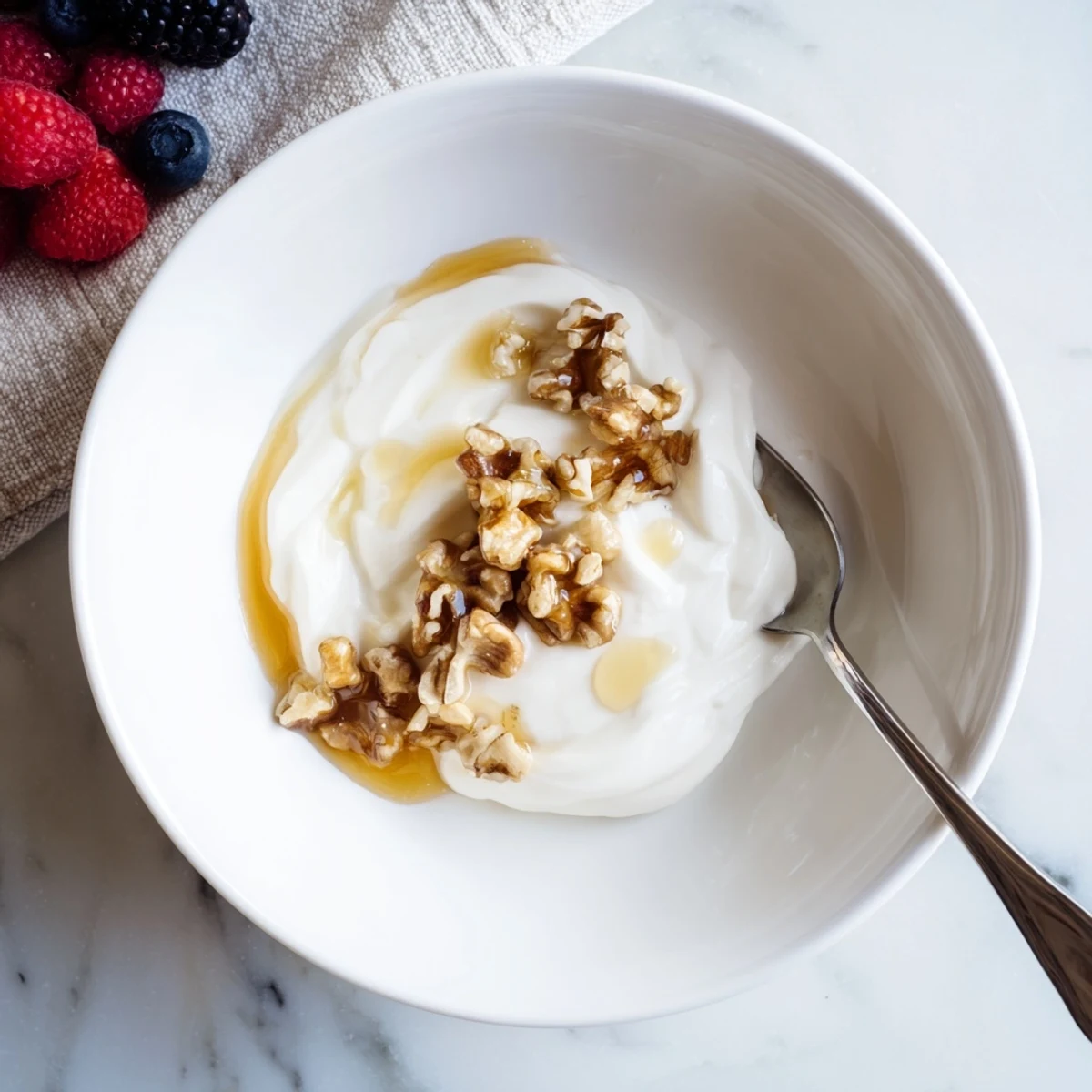
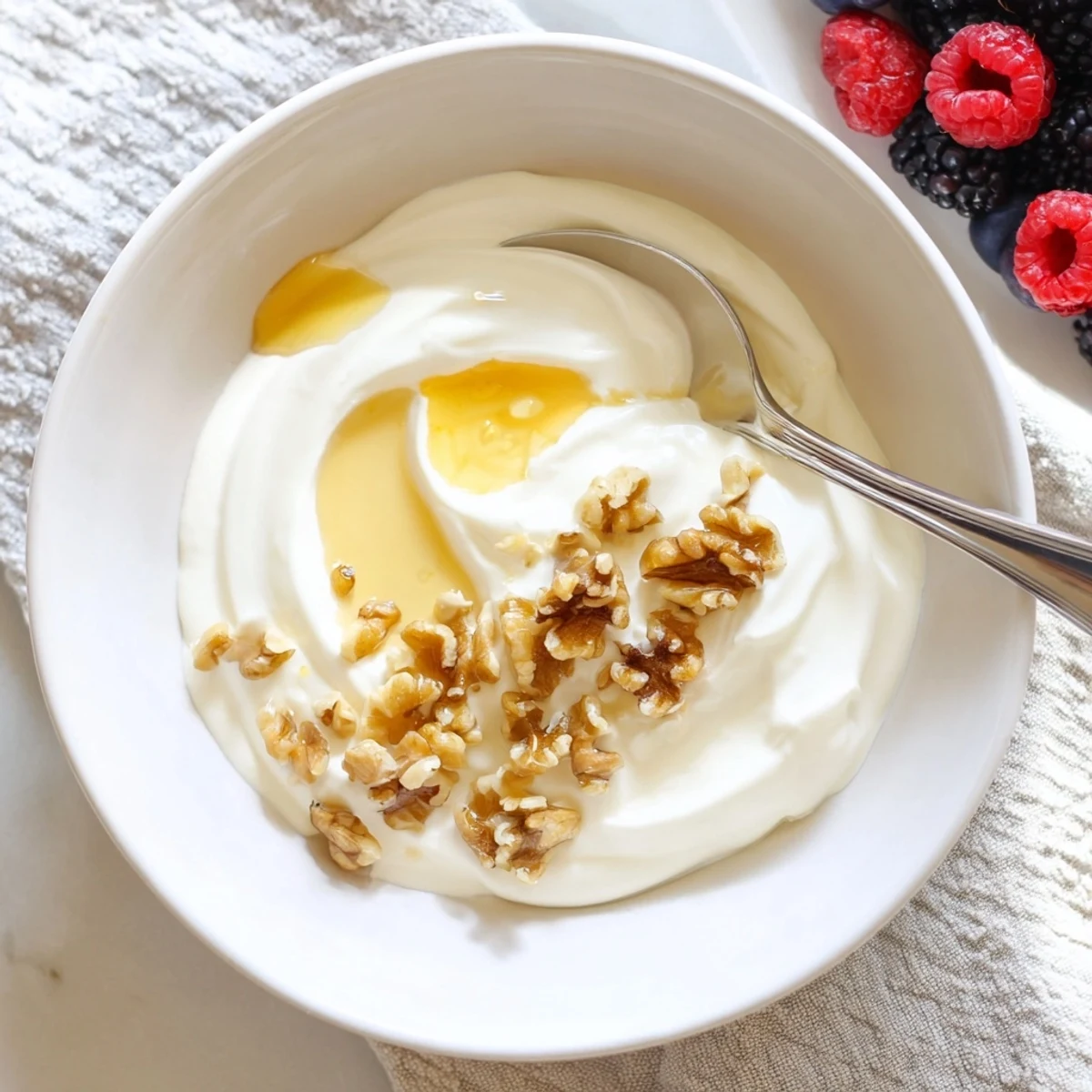
Plain Greek yogurt is incredibly versatile on its own, but the way you finish it matters. A drizzle of honey and some toasted walnuts turns it into something dessert-worthy. Fresh vanilla extract folded in creates the perfect base for fruit parfaits.
Storage And Timing
Your homemade Greek yogurt keeps well in the refrigerator for up to two weeks, though it rarely lasts that long in my house. The tanginess develops over time, so some people prefer it after a few days of aging. I like to make a fresh batch when my current one hits the one-week mark.
- Always use clean utensils when scooping to prevent contamination
- The yogurt will thicken slightly more as it chills
- Save some whey for your next batch to boost the culture
 Pin It
 There's something profoundly satisfying about making something so essential from scratch. Once you taste that first batch, you'll understand why people have been making yogurt this way for thousands of years.
Recipe Questions
- → Why is my yogurt too runny?
-
Runny yogurt usually means insufficient straining time or temperature fluctuations during culturing. Strain longer (up to 4 hours) and ensure your yogurt stays consistently warm around 110°F during the culturing phase.
- → Can I use low-fat milk?
-
Whole milk produces the creamiest results with the best yield. Low-fat milk works but yields thinner yogurt that may strain down significantly less. For the authentic Greek texture, whole milk is recommended.
- → How long does homemade yogurt last?
-
Properly stored in an airtight container, homemade Greek yogurt keeps fresh for 1-2 weeks in the refrigerator. The tanginess intensifies over time. Always use clean utensils when scooping to prevent contamination.
- → What can I do with the whey?
-
The liquid whey is packed with protein and probiotics. Use it in smoothies, as a base for soups, substitute for buttermilk in baking, or even ferment vegetables. It keeps for about a week refrigerated.
- → Do I need a yogurt maker?
-
No special equipment is required. A yogurt maker provides consistent temperature but your oven with just the light on, a warm corner, or wrapping the container in towels works perfectly. The key is maintaining around 110°F for the culturing period.