
 Pin It
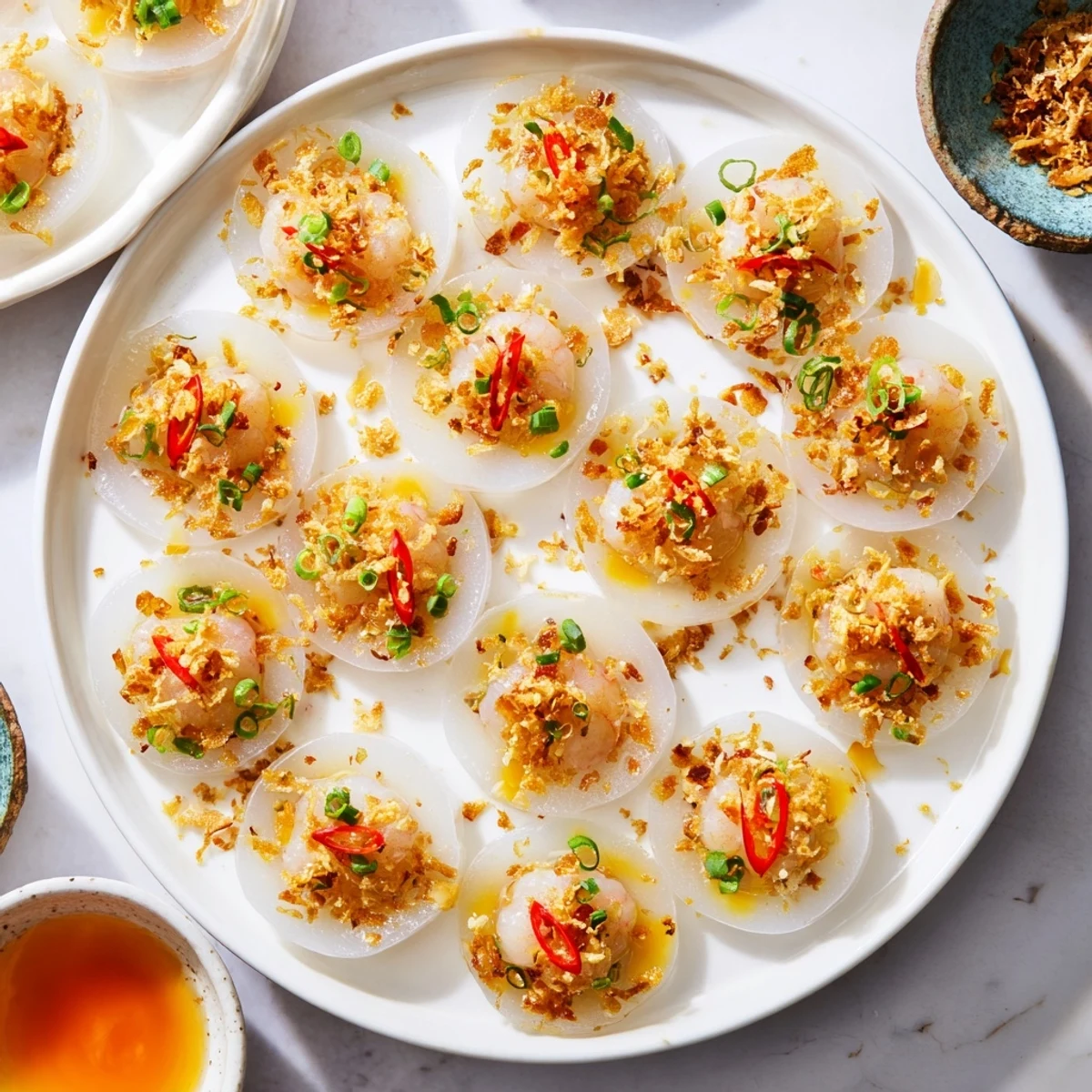
 Banh Beo are delicate Vietnamese steamed rice cakes that showcase the perfect balance of textures and flavors. These small, translucent cakes are made from a simple batter of rice flour and tapioca starch, then steamed until set and slightly chewy. Each cake is topped with a savory mixture of seasoned shrimp, aromatic scallion oil, and crispy fried shallots. The dish is typically served with a tangy fish sauce dipping sauce that cuts through the richness and adds brightness. Originating from central Vietnam, these appetizers are perfect for sharing and demonstrate the intricate balance of Vietnamese cuisine—combining soft, creamy, crunchy, and savory elements in one bite.
The first time I encountered banh beo was at a tiny street stall in Hue, where the vendor moved with practiced grace between steaming baskets and waiting customers. She'd slide these delicate white discs onto small plates, each one glistening under the layer of scallion oil, and I watched entranced as people demolished them three or four at a time. The rice cakes were impossibly tender, dissolving almost instantly against my tongue while the shrimp topping provided this satisfying, savory resistance. I've been chasing that memory in my own kitchen ever since.
Last summer, I made these for a dinner party when my cousin announced she was pregnant and craving Vietnamese food but couldn't handle anything too heavy. We stood around the kitchen island, steamer basket hissing, assembling dozens of these little cakes while catching up about everything and nothing at once. The way her face lit up with the first bite—the familiar flavors of home but in this gentle, unassuming form—reminded me why I bother with recipes that require multiple steps and specialized equipment. Some dishes just bring people together like that.
Ingredients
- Rice flour (1 cup): This forms the delicate foundation of the rice cakes, creating that characteristic silky texture that makes banh beo so irresistible
- Tapioca starch (2 tbsp): The secret ingredient that gives these cakes their slight chew and prevents them from being too fragile or mushy
- Raw shrimp (200 g): Fresh shrimp chopped into tiny pieces create the traditional savory topping—don't overcook them or they'll become tough
- Scallions (2 stalks): Finely sliced and drowned in hot oil, these become aromatic and milder, adding that essential Vietnamese flavor profile
- Fish sauce (2 tbsp): Use a good quality fish sauce for the dipping sauce—its deep umami flavor balances the mild rice cakes perfectly
- Crispy fried shallots (2 tbsp): Make extra because these golden, caramelized shallots add incredible crunch and sweetness to every bite
Instructions
- Mix the batter:
- Whisk together rice flour, tapioca starch, water, salt, and oil until completely smooth, then let it rest for 10 minutes—this hydrates the flour and prevents lumpy cakes later.
- Prepare the shrimp topping:
- Sauté chopped shallots in oil until fragrant, then add the finely chopped shrimp with seasonings, stirring until cooked and slightly dried out for better texture.
- Make the scallion oil:
- Heat oil until it's hot but not smoking, then pour it immediately over the sliced scallions in a heatproof bowl—the residual heat cooks them just enough.
- Steam the rice cakes:
- Grease small heatproof dishes, pour in a thin layer of batter, and steam for 7–8 minutes until set and glossy—work in batches if your steamer is small.
- Prepare the dipping sauce:
- Whisk together fish sauce, sugar, lime juice, water, and chili until the sugar completely dissolves, adjusting the balance to your taste.
- Assemble and serve:
- Top each warm rice cake with shrimp mixture, scallion oil, crispy shallots, and mung bean paste if you're using it, then serve immediately with dipping sauce.
 Pin It
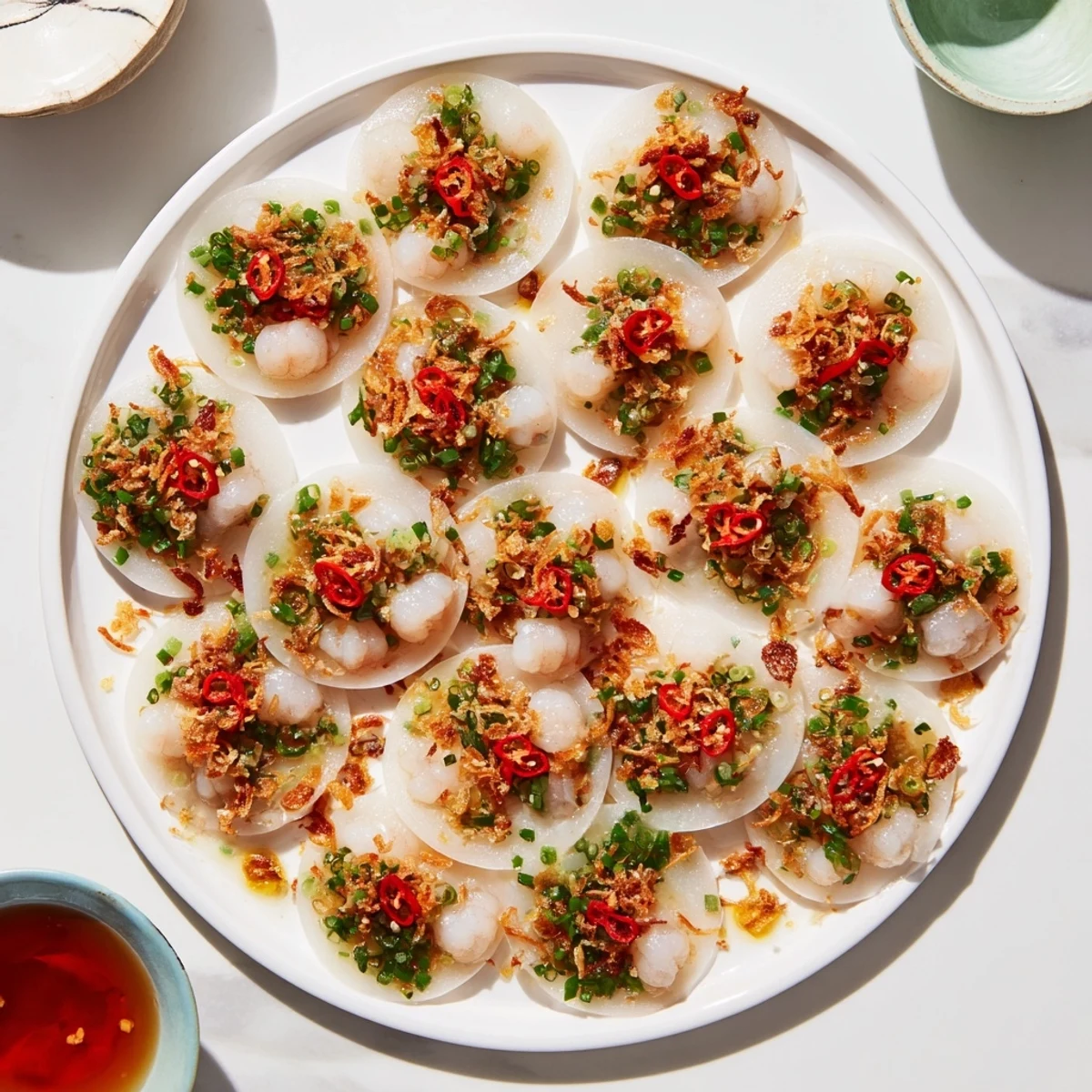
 My aunt once told me that banh beo were traditionally made by grandmothers who would sit by the steamer all morning, making hundreds of these tiny cakes for family gatherings. There's something almost meditative about the process—pouring, steaming, assembling—each cake becoming a small offering of care and attention. When I serve these now, I think about all those hands that have made the same motions before me, connecting across time through something as simple as rice and shrimp.
Getting the Steaming Right
The steaming process is where most people go wrong with banh beo. I've found that using small ceramic dishes or ramekins works better than large molds because the heat circulates more evenly, and the individual portions are easier to handle. Make sure your water is at a steady boil before adding the dishes, and work quickly so all the cakes steam for approximately the same time.
Making It Your Own
While traditional banh beo are topped with shrimp, I've experimented with so many variations. Sometimes I use ground pork with wood ear mushrooms for a heartier version, or crumbled fried tofu for a vegetarian option that still has that satisfying texture. The key is keeping the topping well-seasoned and not too wet, or it'll make the rice cakes soggy.
Timing Everything Perfectly
The biggest challenge with banh beo is timing everything so the rice cakes are still warm when you serve them. I've learned to prepare all toppings first, set them within arm's reach of the steamer, then start the assembly line the moment the first batch comes out. It feels a bit like a synchronized dance, but that's part of what makes serving these special.
- Set up your workspace with all toppings arranged in small bowls before you start steaming
- Keep the finished cakes covered with a clean kitchen towel while you finish the remaining batches
- If some cakes cool too much, give them a quick 30-second steam to bring back that perfect tender texture
 Pin It
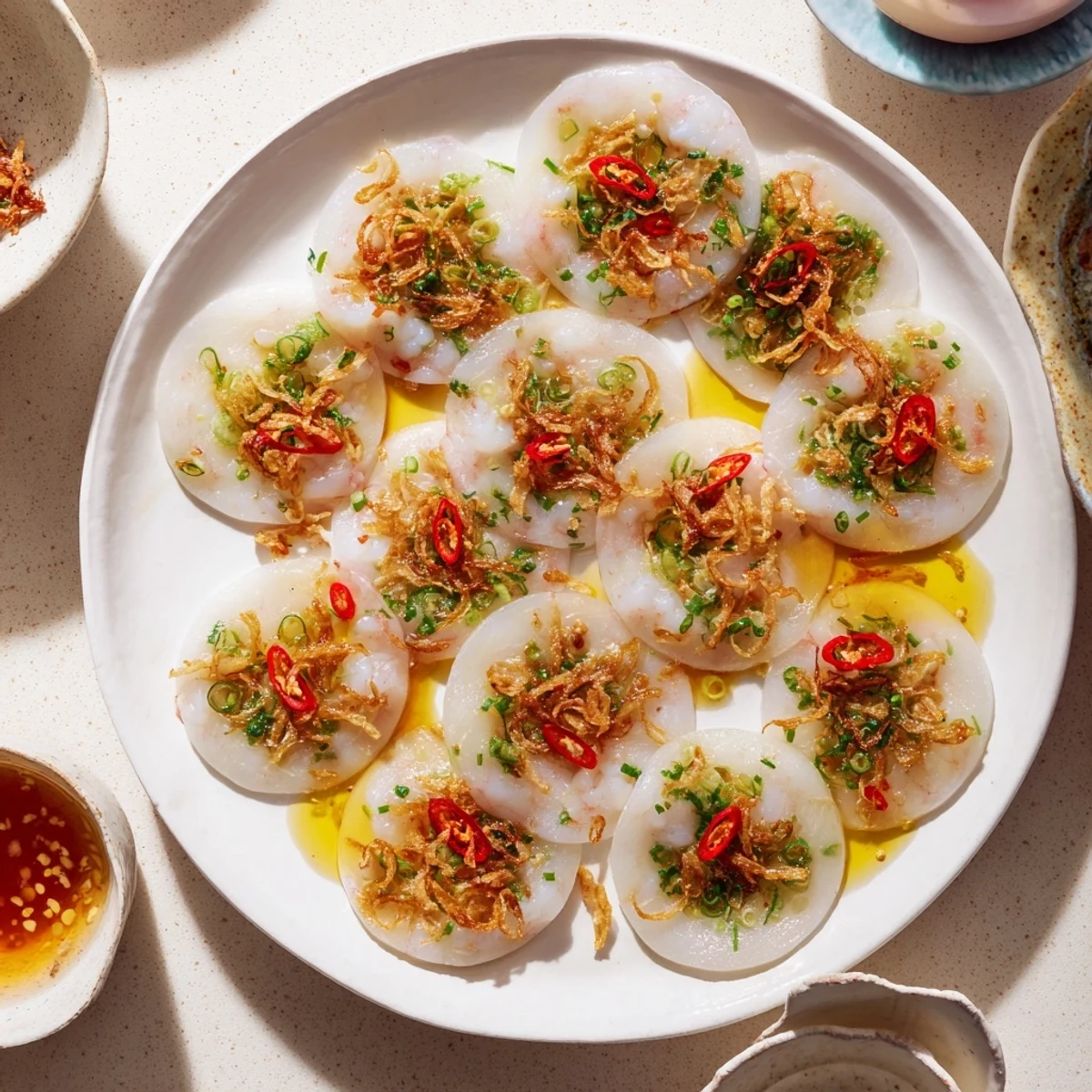
 There's something deeply satisfying about making banh beo—maybe it's the way they transform simple ingredients into something extraordinary, or how they bring people together, hovering around the platter, reaching for just one more. Every bite carries the warmth of the steam, the crunch of shallots, and the kind of joy that only comes from sharing food made with intention.
Recipe Questions
- → What is Banh Beo?
-
Banh Beo are delicate Vietnamese steamed rice cakes made from rice flour and tapioca starch. These small, translucent cakes are topped with savory shrimp, scallion oil, and crispy shallots, originating from central Vietnam.
- → What makes Banh Beo different from other steamed cakes?
-
Banh Beo stands out for its delicate texture achieved through the combination of rice flour and tapioca starch, creating cakes that are soft yet slightly chewy. The individual portion size and elaborate toppings of seasoned shrimp and aromatic oils make it distinct from other Asian steamed cakes.
- → Can I make Banh Beo without a steamer?
-
While a traditional steamer works best, you can improvise by placing heatproof dishes on a rack inside a large pot with a tight-fitting lid. Ensure the water doesn't touch the dishes and maintain steady steam throughout cooking.
- → How do I store and reheat leftovers?
-
Store assembled Banh Beo in an airtight container in the refrigerator for up to 2 days. Reheat by steaming for 2-3 minutes or microwaving briefly. Keep toppings separate if possible to maintain texture. The batter can be refrigerated overnight before steaming.
- → What can I use instead of shrimp topping?
-
You can substitute shrimp with finely chopped sautéed mushrooms, ground pork, or crispy fried pork skin. For vegetarian versions, use mushrooms or seasoned crumbled tofu. Adjust seasoning to maintain the savory balance that complements the mild rice cakes.
- → Why do my rice cakes turn out too thick or rubbery?
-
Thick or rubbery cakes usually result from using too much batter per dish or overcooking. Pour only a thin layer (about 2 tablespoons) into each dish and steam just until set and translucent, about 7-8 minutes. The batter should rest before steaming to ensure proper texture.